Hearing First Hythe: Best Route and Directions Explained
This Listing Refreshed: 29th August, 2026 7:57 pm
Waxfree Guarantee™: The only ear wax removal clinic in Hythe offering the Waxfree Guarantee™.
We’re the only specialist microsuction ear wax removal clinic in Hythe offering Microsuction Earwax Removal and Manual Instrument Earwax Removal through our expert Audiologists. Every earwax removal practitioner is personally selected by our founder, Jason Levy, so you are cared for by a team that is focused on quality and patient confidence. In Hythe, we are proud to be known as the ear wax removal experts.
Our convenient location in Hythe, Kent, also serves Saltwood, Seabrook, Palmarsh, Botolph’s Bridge, St Mary’s Bay, Romney Marsh, Newchurch, Folkestone, Sandgate, Pedlinge, Lympne, West Hythe, Dymchurch, Westenhanger, Beachborough, Stanford, Etchinghill, Postling, Sellindge, Burmarsh, Aldington, Bonnington, Bilsington, Stone Cross, Ruckinge, Mersham, The Forstal, Smeeth, Lilyvale, Brabourne Lees, Monks Horton, Broad Street, Newbarn, Stowting, Sixmile, Lymbridge Green, Bodsham, Newington, Arpinge, Frogholt, Peene, other towns and villages in Kent.
Clear Directions to Hearing First Hythe via Sun Lane
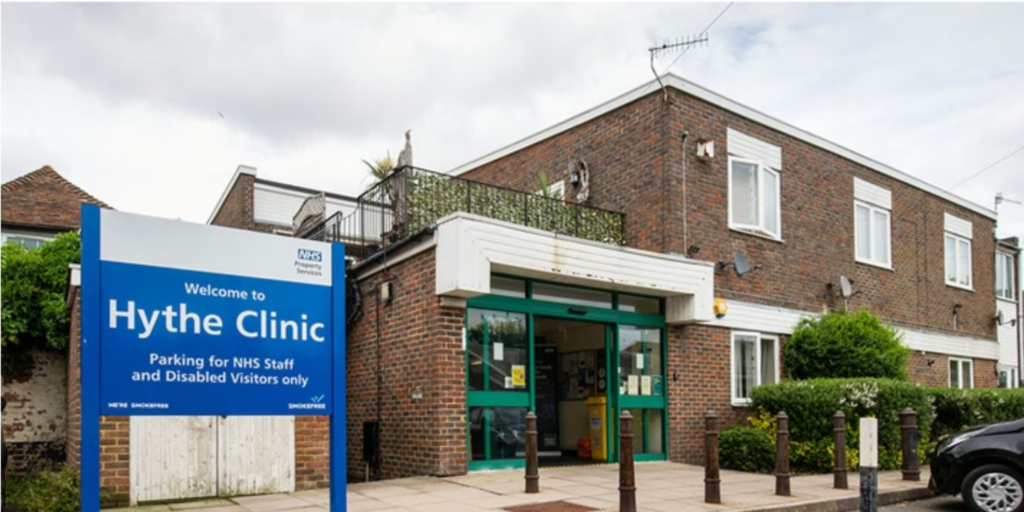
If you are travelling for hearing care, the best approach is to plan the journey to Hythe Clinic on Sun Lane with a little spare time built in for parking, walking to the entrance and settling before check-in. This is especially useful if you are attending for microsuction ear wax removal, a hearing assessment, or an Audiologist appointment, because a calm arrival helps you concentrate on the clinical part of the visit rather than the travel. Hythe can feel straightforward once you know the final approach, but local traffic patterns, school-run movements and holiday flow can all affect the last few minutes of the trip. For that reason, it is sensible to treat the journey as a healthcare visit, not a quick stop in town. Whether you are coming from Hythe itself, Folkestone, Ashford, Romney Marsh or elsewhere in Kent, a clear route and realistic timing can make the day much easier. Use your sat nav as a guide, then rely on road names and local signs as you close in on Sun Lane and the clinic area.
How to Handle the Last Part of the Route
The final stretch of the journey matters most, because that is when drivers often become distracted by junctions, parked cars or unfamiliar turns. Keep to the main local roads for as long as possible, then move onto smaller streets only when you are near the destination. That tends to work better than trying to shorten the route with residential cut-throughs, which can be narrow and awkward if you are not familiar with them. If you are travelling in poor weather, at dusk, or during a busy weekday period, a simpler approach is usually the better one. Patients with hearing loss sometimes find navigation more tiring than expected, so reducing complexity can make a genuine difference. The goal is not simply to arrive, but to arrive composed, on time and ready to discuss your symptoms, whether that means blocked ears, wax build-up or a recent change in hearing.
A Practical Navigation Tip for First-Time Visitors
Set your sat nav before you leave, then confirm the road name as you get close to the clinic. If you wait until the last moment to make changes, you are more likely to miss the entrance or overshoot the turn. A final check is particularly helpful if you are arriving from an unfamiliar direction or if road conditions have changed since your last journey through the area.
Keep the Final Approach Simple
When you are almost there, stop thinking about the quickest possible route and focus on the clearest one. That small shift can reduce stress, improve concentration and help you keep your attention on the road, which is exactly what matters before a medical appointment.
Why Calm Arrival Matters for Ear Care
People often underestimate how much travel affects the rest of the visit. If you arrive with enough time to breathe, check your details and orientate yourself, you are better placed to ask questions and explain what has been happening with your ears and hearing.
What to Know Before Travelling for Ear Wax Removal
A good journey starts with a few small preparations, especially if you are coming in for microsuction ear wax removal or manual instrument removal. If your ears are very blocked, you may feel slightly off balance or less confident with directions, so it helps to keep the travel part as straightforward as possible. Bring any relevant medical information, make sure your phone is charged and check whether you may need someone to drive you if you feel uncertain after the appointment. People often focus on the procedure itself, yet the visit begins much earlier, when you leave home and decide how to get there. By planning the route, parking and timing in advance, you give yourself the best chance of a smooth, calm appointment. That is especially useful if you have been postponing the visit, have hearing loss symptoms, or are attending because wax build-up is affecting daily life.
Small Details That Help on the Day
If you wear hearing aids, you may wish to note how they have been performing before you travel, because the Audiologist may ask about sound quality, feedback or sudden changes in hearing. It can also help to avoid using cotton buds or trying home remedies right before you come, as this may leave the ear canal irritated. Patients are often more comfortable when they arrive with clear notes about symptoms, timelines and previous treatments. That makes the consultation more focused and helps the clinician decide whether microsuction or another approach is the better fit.
A Practical Tip for a Safer Visit
Do not rush the final part of the journey. A few extra minutes spent parking correctly, finding the entrance and settling your belongings can make the appointment feel much more organised.
Why a Calm Arrival Matters in Hearing Care
When the journey is straightforward, you can concentrate on the important part, which is getting the right clinical advice for your ears and hearing.
For patients in Hythe and the surrounding Kent area, the simplest route is usually the one that gives you the clearest arrival, the least stress and the easiest parking, not just the shortest distance on a screen.
Finding the Most Practical Way in from Nearby Kent Roads
Visitors come to Hearing First Hythe from many parts of Kent, and the most suitable route depends on where you are starting, how busy the roads are and whether you prefer a direct or simpler drive. If you are coming from Folkestone, it is usually better to take the clearest local connection rather than trying to save a minute or two with a side street route that you do not know well. Drivers from Ashford often find it easiest to use the main road network first, then switch to the local approach only when Hythe is nearer. The same applies if you are travelling from Dover, Sandgate, Cheriton or the villages around Romney Marsh. This is a healthcare journey, so clarity is more important than chasing the shortest distance. That matters even more if you are heading in for microsuction, ear wax removal, or an audiology consultation after days of discomfort. A direct route usually means fewer turns, fewer delays and a calmer start to your appointment.
- Choose a route with clear junctions if you dislike complicated driving, because confidence is often worth more than a small saving in miles.
- Check live traffic before you leave, since roadworks, coastal visitor flow and rush-hour pressure can change the journey quickly.
- Use the main roads for most of the trip, then move onto the local approach only when you are close to Hythe Clinic.
- Allow extra time if you are travelling with an older relative, a child or someone who needs a steadier pace throughout the visit.
- Keep the appointment time in mind when deciding between routes, because the simplest option is often the best one for healthcare travel.
What to Avoid on the Way
It is usually wise to avoid turning the trip into a test of local knowledge. If a route looks clever on a screen but includes multiple turns, narrow roads or confusing junctions, it may be less suitable on the day of your appointment. The most reliable choice is often the one that feels predictable from start to finish, especially if you are already dealing with hearing symptoms or you have been putting the visit off for too long.
Our Ear Wax Removal Services
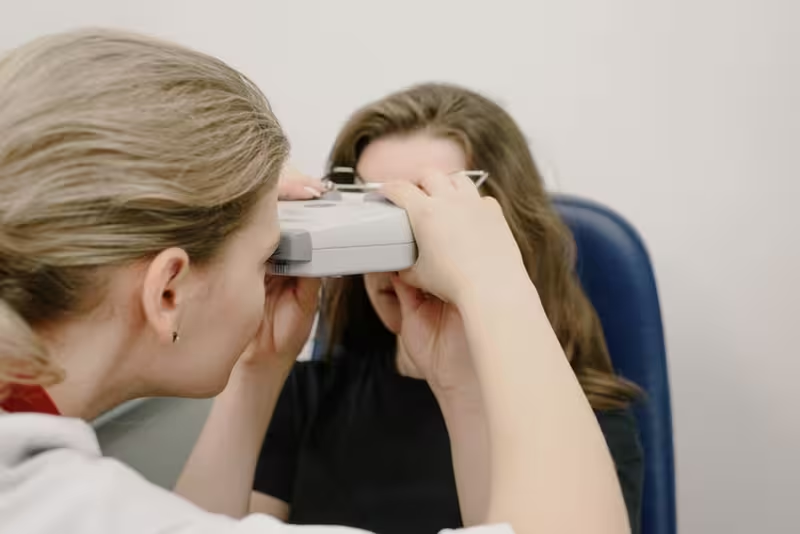
- Manual Instrument Ear Wax Removal
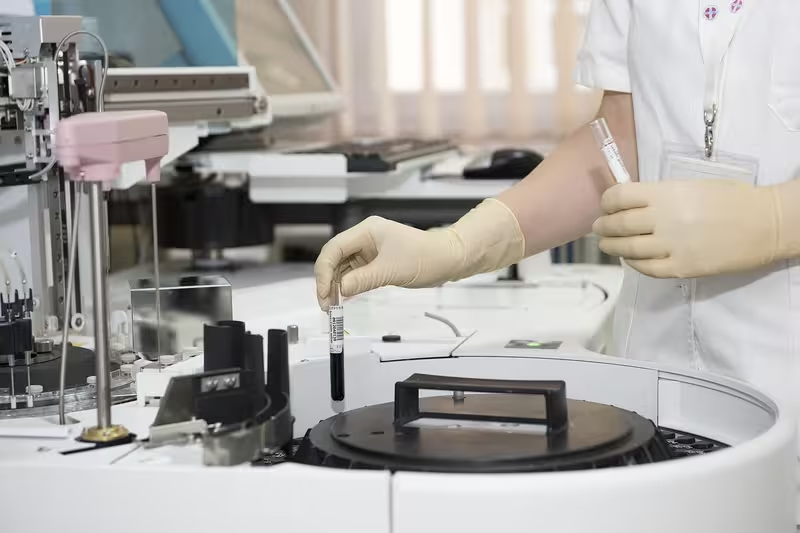
- Microsuction Ear Wax Removal
Hythe: Hearing First Microsuction Ear Wax Removal Hythe
URL: https://www.hearingfirst.co.uk/book-ear-wax-removal-near-me/book-microsuction-ear-wax-removal-hythe/
View Hythe: Hearing First Microsuction Ear Wax Removal Hythe on Google Maps.
Professional ear wax removal Hythe Audiologists. Conveniently located in Hythe Clinic on Sun Lane, with free on-site disabled parking. We are the only ear wax removal clinic in Hythe that offer The Hearing First Waxfree Guarantee™ , so if you have a blocked ear, come to our ear wax removal Hythe clinic. We really are the ear wax removal experts in Hythe.
Parking and Drop-Off Planning for a Smoother Arrival
Car Parks Near Hythe: Hearing First Microsuction Ear Wax Removal Hythe
- Sea Point Car Park, approximately 1.5 miles from Hythe: Hearing First Microsuction Ear Wax Removal Hythe. View on Google Maps.
- Portland Road Car Park, approximately 0.4 miles from Hythe: Hearing First Microsuction Ear Wax Removal Hythe. View on Google Maps.
- Fisherman's beach free car park, approximately 0.6 miles from Hythe: Hearing First Microsuction Ear Wax Removal Hythe. View on Google Maps.
Parking information and place links are provided by Google Maps. Check restrictions and charges locally.
For many patients, the most important part of the journey is not the drive itself, but what happens once they reach the clinic area. Hearing First Hythe is easier to visit when you already know where you are likely to park, where you will be dropped off and how far you need to walk to the entrance. That sort of planning can reduce pressure, especially if you are attending with blocked ears, a hearing concern or any level of mobility difficulty. The clinic offers free on-site disabled parking, which is a helpful option for eligible visitors who need a shorter walk or a more manageable arrival. If you are using a taxi, ask the driver to pause as close to the entrance as possible so you can step out safely and collect your belongings without rushing. If you are driving yourself, keep your booking details, phone and any glasses or hearing aids within easy reach before you leave the car. Small practical steps like these often make the appointment feel much more settled.
How to Make the Walk from the Car Easier
Once you have parked, take a moment to orientate yourself before heading inside. It is usually better to use the most direct and accessible entrance than to keep circling for a slightly nearer spot. If you are travelling with a companion, agree in advance who will park, who will carry paperwork and where you will meet if you need a short pause before entering. This is especially useful for people with balance issues, reduced mobility or anxiety about unfamiliar places. A calm handover from car to clinic can make the rest of the visit feel far more organised. It also keeps your attention on the hearing appointment itself, whether that means discussing wax removal, tinnitus, or the cause of a sudden change in hearing.
Useful Arrival Habits for Patients and Companions
Bring only what you need, keep your belongings light and avoid trying to manage everything at once. If someone is helping you, let them handle the parking or the bags so you can focus on getting to the appointment comfortably. A little coordination before you travel can save time and lower stress when you arrive.
Why Extra Minutes Are Worth Building In
Even a short delay can feel larger when you are anxious, uncomfortable or unsure where to go. Extra time gives you space to find the entrance, calm your pace and speak to staff without feeling hurried.
Practical Benefit for Hearing Appointments
A steadier arrival helps the consultation start well. You are more likely to remember your questions, explain your symptoms clearly and settle into the appointment without the distraction of travel stress.
Routes from Nearby Kent Locations
People travel to Hearing First Hythe from a wide area, and the best route depends on whether you are coming from the coast, the M20 corridor or inland villages. Drivers from Folkestone often benefit from taking the most direct local road connection rather than trying to cut through unfamiliar side streets. Visitors from Ashford may prefer to plan their journey around the main road network first, then move onto the local approach into Hythe once the town is nearer. If you are travelling from Dover, Romney Marsh or the villages around Sandgate and Cheriton, the most sensible route is usually the one that avoids unnecessary stopping and turning, especially if you are attending with an elderly relative or after work. Because this is a healthcare visit, not a sightseeing trip, the route should be chosen for clarity and reliability rather than speed alone. That matters even more for people seeking microsuction, manual ear wax removal or a hearing consultation after days or weeks of discomfort.
How to Pick the Most Suitable Route
There is no single perfect route for everyone, because traffic, road works and weather all influence what feels easiest. If you are driving in heavy rain or at dusk, a simpler route with clearer junctions may be preferable to one that only looks shorter on a screen. For patients with reduced hearing, the journey can also feel more tiring when the roads are unfamiliar, so it helps to keep navigation instructions simple. Whenever possible, use a stable and well-known road for most of the trip, then make the final approach only when you are close to the clinic area. That keeps the journey manageable and lowers the chance of last-minute turns.
- Use a route with clear junctions if you find complex roads stressful, because confidence matters as much as speed.
- Check the route before leaving, then compare it with live traffic so you can avoid delays caused by road works or congestion.
- Keep your appointment time in mind and avoid unnecessary detours, because a direct route is often the best route for healthcare visits.
- Leave enough time for parking and walking in, especially if you need disabled access or a slower pace.
- Use landmark points, road names and local signs to confirm you are nearing the clinic rather than relying on memory alone.
Helpful Planning Note for the Way Home
If your appointment is later in the day, think about the return journey as well as the outward trip. Traffic patterns can change, and a route that felt straightforward in the morning may be busier on the way back.
Preparing for Travel When You Need Ear Wax Removal or a Hearing Test
A good appointment day starts before you leave home, particularly if you are coming in for microsuction ear wax removal or a hearing assessment. When your ears feel blocked, travel can seem less straightforward than usual, because discomfort, reduced hearing or a sense of imbalance may make the journey feel more tiring. That is why it helps to keep the day as simple as possible. Check your booking details, make sure your phone is charged and think about whether you may want someone else to drive if you feel uncertain after treatment. Bring any relevant medical notes and consider jotting down recent symptoms, such as muffled hearing, pressure, wax build-up or ringing in the ears. These small actions can save time at the clinic and help the Audiologist focus on the right questions. People sometimes think about the procedure only, but the visit begins much earlier, when you decide how to travel, where to park and how much time to allow before the appointment starts.
Small Details That Make a Difference on the Day
If you wear hearing aids, it can be useful to note how they have been performing before you travel, especially if they have started to whistle, sound faint or behave differently from usual. Avoid using cotton buds or home remedies immediately before your visit, as that can irritate the ear canal and make the consultation less comfortable. Arriving with clear notes about your symptoms and any previous ear problems helps the appointment feel more focused and efficient. It also gives the clinician a better starting point for deciding whether microsuction, manual ear wax removal or another approach is most suitable.
For hearing care, the calmest journey is usually the best journey, because it leaves you with more energy to ask questions, understand the advice and leave with a clearer plan.
A Simple Habit That Helps
Do not leave the final part of the trip to chance. A few extra minutes for parking, walking in and putting your things away can make the whole appointment feel more controlled and less stressful.
Further Details and Booking Help
For more information and to book ear wax removal in Hythe, click here.
Accessible Travel Choices for Visitors with Different Needs
Not every patient comes to Hearing First Hythe in the same way, and that is why accessible planning matters. The clinic setting is designed for practical healthcare visits, and free on-site disabled parking is a major advantage for visitors who need a shorter walk, less standing time or a simpler route from the car. If you live with arthritis, poor balance, visual impairment or reduced mobility, it is worth thinking about the whole journey before the day arrives. The same applies if you are bringing an older relative, a child or someone who needs steady support. A clear route, an easy parking plan and enough time to move at a comfortable pace can take a great deal of pressure out of the visit. Hearing appointments should feel respectful and well organised, and accessibility is part of that. When you plan the travel carefully, you can focus on the care itself rather than worrying about steps, distance or where to go once you arrive.
- Choose familiar roads and straightforward junctions where possible, because confidence on the drive can reduce fatigue before the appointment.
- Allow extra time if you are travelling from elsewhere in Kent, so turning, parking and getting inside can happen without pressure.
- Consider a drop-off near the entrance if walking far from the car would be uncomfortable or tiring for you.
- Keep a note of your symptoms, such as blocked hearing or ear discomfort, so you can explain them clearly to the clinician.
- Ask a companion to help with doors, bags or paperwork if you already know the journey may leave you feeling tired.
How Companions Can Help
If someone is travelling with you, their job is often to make the day steadier rather than busier. They can help with parking, belongings, doors and timing, which leaves you freer to concentrate on the hearing appointment and the advice you are given.
A Short Note for First-Time Visitors
If the clinic is new to you, give yourself permission to arrive early and find your bearings. A few quiet minutes at the start can make the rest of the visit feel much more manageable.
Expert Ear Wax Removal with an Audiologist Close to Home
Your ears and hearing are delicate, and their care should be in expert hands. Some providers delegate ear wax removal to lay people, treating it as a routine procedure. However, we believe it calls for the skill and experience of a trained Audiologist.
Your hearing is too important to leave to chance, and at our clinic, only qualified Audiologists perform ear wax removal. We are committed to providing an effective procedure tailored to your needs, with your ears cared for by a specialist who has in-depth knowledge of ear anatomy and physiology. This helps minimise the risk of injury and supports a safe, professional standard of care.
Hearing First Hythe – Microsuction Ear Wax Removal Hythe Tn34 Map
Audiologist-Led Ear Wax Care in Hythe
Ear wax removal deserves careful, professional attention because the ear canal and hearing system are delicate. At Hearing First Hythe, the page explains that removal is carried out by qualified Audiologists rather than delegated to lay practitioners. This Audiologist-led approach is intended to give patients greater confidence that their appointment is managed by a specialist who understands ear anatomy, physiology and the importance of protecting hearing.
- Care delivered by qualified Audiologists with specialist knowledge of ears and hearing.
- A focus on an ear wax removal procedure tailored to individual needs.
- Professional assessment and careful technique designed to minimise the risk of injury.
- Reassurance for people experiencing a blocked ear or seeking local hearing care.
Choosing a specialist for microsuction or manual ear wax removal can make the process feel clearer and more comfortable, particularly if you are unsure which approach may be most suitable. Before booking, explain any symptoms, previous ear problems or concerns so the Audiologist can guide the conversation responsibly. For local patients in Hythe and the surrounding Kent communities, Hearing First offers a focused route to expert ear wax care with hearing health kept firmly at the centre of the visit.
Planning the Return Journey After Your Appointment
It is easy to focus on the outward trip and forget that you will need to get home again afterwards. For many patients, the return journey can feel different from the journey out, particularly if you have had microsuction, your hearing feels clearer or you are simply more aware of road conditions once the appointment is over. If you are travelling later in the day, traffic levels may change, and a route that felt relaxed in the morning might be busier on the way back. That is why it helps to think about both directions before you leave home. If someone else is driving, tell them if you are likely to feel tired, unsettled or light-headed after the appointment, especially if your ears have been very blocked. If you are driving yourself, give yourself a few minutes to settle before setting off. A careful plan for the return trip can make the whole visit feel more rounded and less rushed, which is especially useful when you have come for hearing care after a long delay.
What to Do Before Leaving the Clinic Area
Before you set off home, check that you have everything you brought with you, including your phone, glasses, hearing aids and any paperwork. If the clinician has given you aftercare advice, take a moment to read it before driving away so you do not have to try to remember it later. A short pause can be helpful if your balance feels slightly different after treatment or if your hearing seems unusually open compared with before.
- Review your aftercare notes before you leave, because it is easier to understand instructions when you are still calm and on site.
- Ask whether you should avoid anything for the rest of the day, especially if you have had wax removed from one or both ears.
- Check your route home while you are still at the clinic, so you are not trying to plan it at a busy junction later.
- Allow for a slower drive if you feel tired, particularly after an appointment that has taken more time than expected.
- Keep water and any essential items close by, so the journey home feels comfortable and well prepared.
What Does Ear Wax Removal in Hythe Cost?
Published Payment Methods
- Credit cards
- Debit cards
- Contactless or NFC payments
Payment information may change. Confirm prices, insurance eligibility and accepted methods directly with the provider. Place attributes are provided by Google Maps.
Ear wax removal in Hythe starts at £34. Pricing can vary if it is one or two ears, at peak or off-peak times, and how far in advance the booking is made.
21 Interesting Facts About Hythe
- One of the Original Cinque Ports
Hythe was one of the original five Cinque Ports established for military and trade purposes in medieval England, providing ships and men to the Crown. - Home to the Famous Romney, Hythe & Dymchurch Railway
This one-third scale steam railway has run since 1927 and stretches from Hythe to Dungeness, offering a unique and scenic ride along the coast. - St Leonard’s Church Has an Ossuary
St Leonard’s Church in Hythe contains one of only two known ossuaries (bone stores) in the UK, with over 2,000 skulls and 8,000 thigh bones stacked along the crypt. - Ear Wax Removal In Hythe
The very best ear wax removal in Hythe is now available at Hearing First Hythe at Hythe Clinic. Click here to book ear wax removal in Hythe now! - Hythe Means “Haven” or “Landing Place”
The name Hythe comes from the Old English word “Hǣþ,” meaning a safe landing place for boats, reflecting its coastal and trading heritage. - Royal Military Canal Runs Through It
This defensive canal was built during the Napoleonic Wars to protect England from invasion and now serves as a peaceful walking and boating route. - Hythe Used to Have a Harbour
Hythe had a busy harbour. Due to silting, the sea retreated, Centuries ago, and the harbour disappeared — changing the town’s maritime role. - A Hotspot for Smuggling in the 18th Century
Hythe was a known smuggling centre, with contraband goods such as brandy and silk secretly brought ashore and hidden in cellars and tunnels. - Visited by Charles Dickens
Charles Dickens visited Hythe and praised its peaceful character and seafront walks in his travel writings and personal letters. - Hythe Was a Parliamentary Borough
Until 1950, Hythe had its own Member of Parliament despite being a relatively small town, a relic of its Cinque Port status. - Hythe Imperial Hotel History
This grand Victorian hotel once hosted royalty and high society guests and it remains a historic landmark with views of the English Channel. - Training Ground for British Army Officers
Hythe was once home to a School of Musketry (now the Small Arms School Corps), training soldiers in the use of rifles and marksmanship. - Views of France on Clear Days
On a clear day, you can see across the English Channel to the French coast from Hythe’s seafront promenade. - Hythe Green Was Once a Market Site
The central green was used for markets and fairs in medieval times and is still a public space used for community events today. - WWII Defences Still Visible
Pillboxes and anti-tank obstacles from World War II remain visible around Hythe, part of England’s coastal defence system. - Home to a Vibrant Art Scene
In recent years, Hythe has become home to artists, galleries and studios, adding creative vibrancy to this historic town. - Known for Its Victorian and Edwardian Architecture
Hythe’s streets feature beautiful buildings from the 19th and early 20th centuries, reflecting its heyday as a seaside retreat. - Hythe Festival Celebrates Local Culture
This annual event showcases music, theatre, art and heritage, drawing locals and visitors to celebrate the town’s creativity and history. - Home to One of Kent’s Oldest Golf Courses
Founded in 1887, Sene Valley Golf Club overlooks the Channel and offers spectacular views along with historic fairways. - Hythe Town Hall Has a Georgian Facade
The elegant town hall dates from 1794 and remains the centre of civic life, with a striking Georgian design and central location. - Popular with Walkers and Cyclists
Hythe is at the start of the scenic Saxon Shore Way and offers a wide network of trails along the canal, countryside and coast.
Driving Directions to Hythe: Hearing First Microsuction Ear Wax Removal Hythe
- Hawkinge to Hythe: Hearing First Microsuction Ear Wax Removal Hythe: approximately 6.8 miles and 12 minutes by car. The route typically begins: Head south-east on Canterbury Rd towards Uphill; then Continue onto White Horse Hill; then At the roundabout, continue straight onto White Horse Hill/A260 Continue to follow A260. Open this route in Google Maps.
- Church Mouse Studio to Hythe: Hearing First Microsuction Ear Wax Removal Hythe: approximately 0.6 miles and 4 minutes by car. The route typically begins: Head west on High St towards Market Hl; then Turn left onto Malthouse Hill; then Turn left onto Rampart Rd/A259 Continue to follow A259. Open this route in Google Maps.
Distances, indicative journey times and route links are provided by Google Maps. Check live conditions before travelling.
Public Transport and Taxi Options for Reaching Hythe Clinic
Nearest Bus Stops to Hythe: Hearing First Microsuction Ear Wax Removal Hythe
- Douglas Avenue, approximately 0.1 miles from Hythe: Hearing First Microsuction Ear Wax Removal Hythe. View this bus stop on Google Maps. Walking directions from Douglas Avenue to Hythe: Hearing First Microsuction Ear Wax Removal Hythe.
- Old Prospect Road, approximately 0.1 miles from Hythe: Hearing First Microsuction Ear Wax Removal Hythe. View this bus stop on Google Maps. Walking directions from Old Prospect Road to Hythe: Hearing First Microsuction Ear Wax Removal Hythe.
- Saltwood Care Centre, approximately 0.2 miles from Hythe: Hearing First Microsuction Ear Wax Removal Hythe. View this bus stop on Google Maps. Walking directions from Saltwood Care Centre to Hythe: Hearing First Microsuction Ear Wax Removal Hythe.
- Mill Road, approximately 0.3 miles from Hythe: Hearing First Microsuction Ear Wax Removal Hythe. View this bus stop on Google Maps. Walking directions from Mill Road to Hythe: Hearing First Microsuction Ear Wax Removal Hythe.
- Quarry Road, approximately 0.3 miles from Hythe: Hearing First Microsuction Ear Wax Removal Hythe. View this bus stop on Google Maps. Walking directions from Quarry Road to Hythe: Hearing First Microsuction Ear Wax Removal Hythe.
- Red Lion Square (Stop A), approximately 0.3 miles from Hythe: Hearing First Microsuction Ear Wax Removal Hythe. View this bus stop on Google Maps. Walking directions from Red Lion Square (Stop A) to Hythe: Hearing First Microsuction Ear Wax Removal Hythe.
Nearest Rail, Tube and Tram Stations to Hythe: Hearing First Microsuction Ear Wax Removal Hythe
- Sandling, approximately 1.6 miles from Hythe: Hearing First Microsuction Ear Wax Removal Hythe. View this station on Google Maps. Walking directions from Sandling to Hythe: Hearing First Microsuction Ear Wax Removal Hythe.
- Westenhanger, approximately 2.7 miles from Hythe: Hearing First Microsuction Ear Wax Removal Hythe. View this station on Google Maps. Walking directions from Westenhanger to Hythe: Hearing First Microsuction Ear Wax Removal Hythe.
- Folkestone West, approximately 3.0 miles from Hythe: Hearing First Microsuction Ear Wax Removal Hythe. View this station on Google Maps. Walking directions from Folkestone West to Hythe: Hearing First Microsuction Ear Wax Removal Hythe.
Stops and stations are ordered by straight-line distance from the destination using Google Places coordinates. Place and walking-direction links are provided by Google Maps.
Not every patient will drive to Hearing First Hythe, and for some people public transport or a taxi is the better choice. If you are using buses, trains and a short onward journey, it is worth checking the timings carefully so you do not arrive flustered or too early without anywhere comfortable to wait. A taxi can be a very practical option if you want a direct door-to-door trip, especially when you are dealing with ear discomfort, balance concerns or reduced hearing. It can also help if you do not want to worry about parking in the area. The most important point is to keep the final arrival as simple as possible. If you are taking a taxi, ask to be dropped as close to the entrance as safety allows. If you are using public transport, make sure you know how long the last leg to the clinic will take on foot. The goal is to arrive steady, not hurried, so that your consultation starts in a calm frame of mind.
How to Make Non-Driving Journeys Work Well
Public transport journeys often involve more moving parts than driving, so the best way to reduce stress is to plan each stage in advance. Check departure times, any changes of service and the length of the final walk before you leave. If you are not confident about the area, a taxi may save energy and keep the day much simpler. This is particularly helpful for patients who are attending for audiology care and want to arrive ready for their appointment rather than worn out by the journey.
Simple Transport Advice
Keep your booking time, the clinic name and the Sun Lane location ready on your phone or written down on paper. That makes it easier to explain the destination clearly to a driver or to check the route if your phone signal is weak on the day.
Finding Your Way to Hearing First Hythe
If you are travelling for hearing care, the most straightforward plan is to head for Hythe Clinic on Sun Lane and allow a little extra time for parking, check-in and locating the correct entrance. For anyone using sat nav, it is usually best to treat the clinic as a healthcare destination rather than a quick town-centre stop, because the surrounding road layout and parking can become busier at certain times of day. Whether you are coming for microsuction ear wax removal, a hearing assessment, or an Audiologist appointment, it pays to understand the route before you leave. This guide is here to keep the journey simple, with clear directions, practical travel tips and local context for patients arriving from Hythe, Folkestone, Ashford and other parts of Kent. If you are travelling by car, taxi or public transport, aim for a calm arrival so your appointment begins punctually and without unnecessary strain.
The Easiest Final Approach on Local Roads
For most visitors, Sun Lane is the clearest final approach to the clinic, and drivers should expect slower speeds as they near the practice area. If you do not know Hythe well, it is usually wiser to stay on main local roads first, then move onto smaller streets only when you are close to the destination. That approach tends to be simpler than trying to cut through residential shortcuts, which can be narrow and less predictable. Patients arriving from the Romney Marsh side, Folkestone, or inland Kent often find it helpful to check the route beforehand, especially during school-run times or busy holiday periods. A measured approach also helps if you feel anxious about the appointment or are travelling with someone who needs additional support.
A Simple Navigation Tip for First-Time Visitors
Set your sat nav to the clinic area before you leave, then use the road name and local signs to complete the final turn. Doing this lowers the risk of passing the entrance, which can happen when drivers leave the adjustment too late at a one-way section or a busy junction. If you are coming for ear wax removal or hearing tests, a calm arrival is valuable because it gives you time to settle, ask questions and get ready for your appointment properly.
Useful to Know Before You Set Off
Check your journey time at the moment you plan to travel, not just the evening before. Kent traffic, coastal visitor flow and local roadworks can alter the actual travel time quickly, particularly in peak periods.
Why This Helps Your Appointment
Arriving a little early can ease stress, give you time for paperwork and make it simpler to discuss symptoms such as blocked ears, muffled hearing or wax build-up with the Audiologist.
Plan a Straightforward Route to Hythe Clinic
For a smoother visit to Hearing First Hythe, plan your journey around Hythe Clinic on Sun Lane and allow enough time to park, find the entrance and complete check-in without pressure. This is particularly helpful if you are attending for microsuction ear wax removal, manual instrument removal or a hearing assessment. Treat the final part of the journey as a local healthcare arrival rather than a quick pass through town, as nearby roads may feel busier at school-run times, during holiday periods or when roadworks affect Kent routes.
- Check live journey conditions shortly before leaving, rather than relying only on an earlier travel estimate.
- Follow main roads for most of your journey, then use Sun Lane and local signs for the final approach.
- Set your sat nav before departure and confirm the road name when you are close to the clinic.
- Build in spare time for parking, walking to the entrance and settling before your appointment.
A calm arrival can make a real difference when blocked ears, wax build-up or muffled hearing have already made the day feel difficult. If you are travelling from Folkestone, Ashford, Romney Marsh or another Kent location, avoid unfamiliar residential shortcuts where possible and choose the route that feels clearest. Arriving a little early also gives you time to discuss symptoms, previous ear concerns and any questions with the Audiologist.
How to Choose the Least Stressful Route for Your Appointment
The least stressful route is not always the shortest one, especially when you are travelling for hearing care. A journey that feels predictable and easy to follow is often the best option, because it reduces the chance of missing a turn, arriving late or getting caught out by a road closure. For patients coming to Hearing First Hythe, that often means favouring main roads for most of the trip and saving the smaller local streets for the final approach into Sun Lane. If you feel uneasy driving in unfamiliar places, keep the route as plain as possible. If you are travelling after work, in poor weather or during a busy period, give yourself permission to take the simpler road even if it adds a few minutes. That approach can be especially useful when you are attending for a hearing test, wax removal or advice about symptoms that have already been bothering you for some time. Calm travel supports a calmer consultation, and that is usually the real priority.
Signs That a Route Is Probably the Right One
A good route usually has clear junctions, few sudden turns and easy confirmation points as you get closer to the clinic. If a route forces you to keep checking the sat nav or second-guessing yourself, it may not be the best choice on the day. The aim is to reduce mental effort so that you arrive with more energy for the appointment itself.
- Choose roads you already know where possible, because familiar driving often feels easier and less draining than trying something new.
- Avoid routes with multiple tight turns if you know they make you tense or distract you from the road ahead.
- Use the local road name and nearby signs to confirm your position rather than relying on memory alone.
- Leave enough time for parking and walking in, because the trip is not over until you are safely at the entrance.
- Pick the route that gives you confidence, since a steady arrival is usually more valuable than a tiny saving in distance.
Accessible Travel and Support for Different Visitors
Not every patient arrives in the same way, so it helps to think about access needs before you travel. The clinic setting is designed with practical visits in mind, and free on-site disabled parking is a major advantage for anyone who needs a shorter walk or a more manageable arrival. If you live with arthritis, poor balance, reduced mobility or visual impairment, planning ahead can stop small issues from becoming a barrier to treatment. The same applies if you are bringing a child, an older parent or a partner who needs assistance. A clear route, a known parking point and a steady pace all help the experience feel easier. Hearing appointments should feel organised and respectful, and that starts with making the journey as accessible as possible. If you are coming from outside Hythe, allow a little extra time so turning, parking and entering the building can happen without pressure.
Ways to Make the Journey Less Tiring
Shorter walking distances, familiar roads and fewer changes of direction usually help most people feel more settled on arrival. If you are using public transport, check the connections carefully so you are not left waiting too long before your appointment. If you are arriving by car, consider whether it is better for the driver to drop you at the entrance and park afterwards, especially if standing for long periods is uncomfortable. These small decisions can improve the whole visit, particularly for people seeking ear care after weeks of blocked hearing, discomfort or repeated wax build-up.
- Use a route with clear junctions if you find complex roads stressful, because confidence matters as much as speed.
- Allow time to rest before the appointment if you have travelled a long way from elsewhere in Kent.
- Choose the nearest practical parking point to reduce walking and make the arrival feel more manageable.
- Keep a note of your symptoms so you can explain them clearly when the Audiologist asks about them.
- Ask a companion to help with doors, bags or paperwork if you know the journey is likely to leave you tired.
Accessibility Note for Supportive Visitors
If you are accompanying someone else, your role may be to keep the day calm and practical rather than trying to manage everything at once. A little preparation can make a meaningful difference to how comfortable the visit feels.
Accessible Travel Planning for Every Visitor
Accessible travel planning can help make an ear wax removal appointment at Hearing First Hythe more comfortable from the outset. Free on-site disabled parking may be particularly valuable for people with mobility limitations, arthritis, poor balance or visual impairment, as well as for visitors supporting an older relative or a child. If you are travelling from elsewhere in Kent, leave additional time for the final turns, parking and entry so that you can arrive at a steady pace.
- Choose familiar roads and clear junctions where possible, particularly if unfamiliar routes feel tiring or stressful.
- Consider an entrance drop-off before the driver parks if walking or standing is difficult.
- Check public transport connections in advance if you will need to change services before reaching Hythe.
- Write down key symptoms, such as blocked hearing, discomfort or recurring wax build-up, before the consultation.
- Ask a companion to assist with bags, doors or paperwork when extra support would make the visit easier.
The most suitable journey is not always the shortest one shown on a map. A route with fewer changes of direction, a practical parking plan and time to rest can support a calmer arrival for hearing care. If you have particular access requirements, confirm the practical details that matter to you before setting off. This lets you focus on speaking with the Audiologist and receiving clear guidance about your ears and hearing.
What to Expect When You Arrive Near the Clinic Entrance
Research Catalogue Results for Ear Wax Removal
- The auricular cough reflex: lateralization, prevalence, procedural determinants, and the role of examiner handedness. - van de Loo J, Mayer M, Sharaf K, Eckel H, Jansen L, Klussmann JP, Luers JC., 2026.
- High-definition otoscopic device for humanitarian mission: how i do it. - Lechien JR, Maniaci A, Kipsang MJ, Kibor M, Vaira LA., 2025.
- Use of Castor Oil in Dermatology: A Narrative Review. - Girdler K, Cabatu A, Olds H, Potts GA., 2026.
Source: Europe PMC. These are bibliographic matches, not personalised medical advice or an endorsement of a treatment.
Once you are close to Hearing First Hythe, the most useful thing is to slow the day down slightly and focus on the practical steps that come next. That means parking safely, gathering your belongings, checking your appointment details and finding the entrance without rushing. If you have travelled with another person, decide in advance whether they will wait with you, park the car or help with paperwork. The smoother this stage is, the easier it becomes to move straight into the appointment and talk about your hearing or ear symptoms. People often underestimate how much an uncomplicated arrival helps, especially if they are already feeling uncomfortable because of wax build-up or hearing loss. A few quiet minutes before check-in can make it easier to ask sensible questions and remember important information. It also gives you time to settle if you have travelled from outside Hythe and the journey has taken more energy than expected.
Keep the Transition from Travel to Appointment Organised
Try to keep your essentials together, including your phone, purse or wallet, booking confirmation and any hearing aids you may need to discuss. If the weather is poor or you are carrying several items, take your time and avoid trying to move too quickly from the car to the building. The goal is to arrive in good shape, not simply to arrive fast.
For a healthcare visit, a quiet and organised arrival is often more valuable than squeezing the route into the last possible minute.
A Final Reminder Before Check-In
If you feel unsure when you get there, pause and re-read the clinic details rather than hurrying on instinct. A brief moment of clarity can save you from entering the wrong place or overlooking the correct doorway.
Parking, Drop-Off and Arrival Made Simple
For most patients, the most practical part of the visit is parking and moving from the car to the clinic door without feeling rushed. The site offers free on-site disabled parking, which is especially useful for people with mobility needs, parents bringing a family member to an appointment, or anyone who finds walking from off-site parking difficult. If you are arriving by taxi or being dropped off, ask the driver to pause close to the entrance so you can step out safely and collect your belongings before heading in. When you arrive for ear wax removal, it is sensible to keep your phone, booking details and any glasses or hearing aids close to hand. That makes check-in smoother and lets you focus on the consultation rather than the practical details. Clear arrival planning is often overlooked, yet it can make a genuine difference to how relaxed your visit feels, particularly if you are attending because one ear feels blocked or your hearing has changed suddenly.
What to Do Once You Arrive at the Clinic
Once you are near the clinic, look for the most direct and accessible entrance instead of circling for a slightly closer space. If you are accompanied by someone, agree in advance who will manage parking, who will carry the paperwork and where you will meet if you need a moment before going in. Patients who use mobility aids, have balance concerns or feel uneasy in unfamiliar places often benefit from this kind of preparation. It saves energy and keeps the appointment centred on ear health, hearing care and the questions you need answered.
- Bring any relevant hearing history, especially if you have had ear infections, tinnitus or previous wax problems.
- Use the disabled parking spaces if you qualify, because they are designed to shorten the distance from car to clinic.
- Allow extra time if you are travelling with a wheelchair, walking aid or someone who needs support.
- Keep your booking confirmation ready so check-in is quick and straightforward when you arrive.
- Ask your taxi driver to wait nearby if you may need assistance when leaving after treatment.
Arrival Advice for a Calmer Appointment
Try not to plan a very tight journey on the day, because a rushed arrival can make even a routine visit feel more difficult. A few spare minutes can help you breathe, orientate yourself and talk through any concerns before treatment begins.
Parking and Drop-Off Guidance for Your Visit
Parking arrangements are an important part of planning an appointment at Hearing First Hythe. The clinic has free on-site disabled parking, providing a more convenient option for eligible visitors with reduced mobility, balance concerns or a need for a shorter walk. Nearby alternatives listed on the page include Mount Street Car Park, YourParkingSpace and Fisherman's beach free car park. As local restrictions and charges can change, check the relevant parking information before travelling.
- Keep your phone, booking confirmation, glasses and hearing aids easy to reach before leaving the car.
- If arriving by taxi, ask to be dropped close to the entrance so you can get out safely and comfortably.
- Allow extra time when travelling with a wheelchair, walking aid, companion or family member who needs support.
- Bring relevant hearing history, including previous wax concerns, tinnitus or ear infections, if applicable.
Once you are close to the clinic, prioritise the most direct accessible entrance rather than repeatedly circling for a marginally nearer space. If someone is accompanying you, agree beforehand who will park, carry belongings or meet you at the door. This simple preparation helps preserve energy for the consultation itself and can make ear care feel more organised, especially when discomfort or a sudden change in hearing is causing concern.
Travel Preparation Tips for a More Comfortable Hearing Appointment
Good preparation can make the journey to Hearing First Hythe feel much easier, particularly if you are coming for microsuction ear wax removal or a hearing assessment and you already know your ears are causing problems. When hearing is reduced, even familiar routes can feel a bit more demanding, because you may rely more heavily on visual cues and sat nav instructions. That is one reason why it helps to plan the day in a simple, methodical way. Set out your route, check your phone battery, gather any relevant medical notes and decide whether you need someone else to drive. If you have a history of ear infections, tinnitus or recurring wax build-up, it can also be helpful to make a short note of when the symptoms started and how they have changed. These small steps do not take long, but they can make a big difference once you arrive. They also help the Audiologist understand your situation more quickly, which makes the consultation more focused and useful.
Useful Habits Before You Leave Home
Avoid introducing extra complications on the morning of your appointment. Leave enough time to dress, collect your essentials and get out of the door without a rush. If you have had a long-standing hearing issue, it may be worth writing down the main points you want to discuss so nothing is forgotten once you are in the clinic. Simple preparation often leads to a calmer visit and a more productive conversation.
One Small Step That Helps a Great Deal
Keep your route information easy to reach on your phone or written down on paper. If a signal drops or your battery runs low, you will still know exactly where you need to go.
Why This Matters for the Appointment Itself
When the travel side is already under control, you can concentrate on the clinical advice, ask better questions and leave with more confidence about what happens next.